
Alexander Pope
Nationality
British
Era
Enlightenment
Born
21 May, 1688
Died
30 May, 1744
Popularity
--
Gender
Male
Profession
Poet and translator
Bio
Alexander Pope (1688–1744) was a prominent English poet, translator, and satirist of the Enlightenment era, widely regarded as one of the leading English poets of the early 18th century. He is best known for works such as The Rape of the Lock, An Essay on Criticism, and his translation of Homer.

Bibliography & Archives
The Published Works of Alexander Pope
Explore the complete bibliography, curated literary works, published books, essays, and definitive writings preserved in the archival collection.

Poetry
1711
An Essay on Criticism
A verse essay explaining the principles of good writing, sound literary judgment, and the qualities of an effective critic. Pope emphasizes humility, knowledge, and careful reading.
To err is human; to forgive, divine.

Poetry
1712
The Rape of the Lock
This humorous narrative transforms a quarrel over a stolen lock of hair into an epic-style conflict. Pope satirizes the vanity, social rituals, and trivial disputes of fashionable eighteenth-century society.
What mighty Contests rise from trivial Things

Poetry
1713
Windsor-Forest
Pope celebrates the English landscape and reflects on peace, political order, nature, and national prosperity. The poem connects the beauty of Windsor Forest with the hope for a peaceful future.
Here hills and vales, the woodland and the plain,

Poetry
1733
An Essay on Man
A philosophical poem examining humanity’s place in the universe, the limits of human understanding, morality, and the relationship between human beings and the larger order of nature.
Hope springs eternal in the human breast.

Poetry
1728
The Dunciad
Pope attacks what he regarded as intellectual mediocrity, poor literary standards, and cultural decline. The poem uses mock-heroic language to portray the triumph of dullness over learning and artistic excellence.
A little learning is a dangerous thing; Drink deep, or taste not the Pierian spring.
Poetry
1717
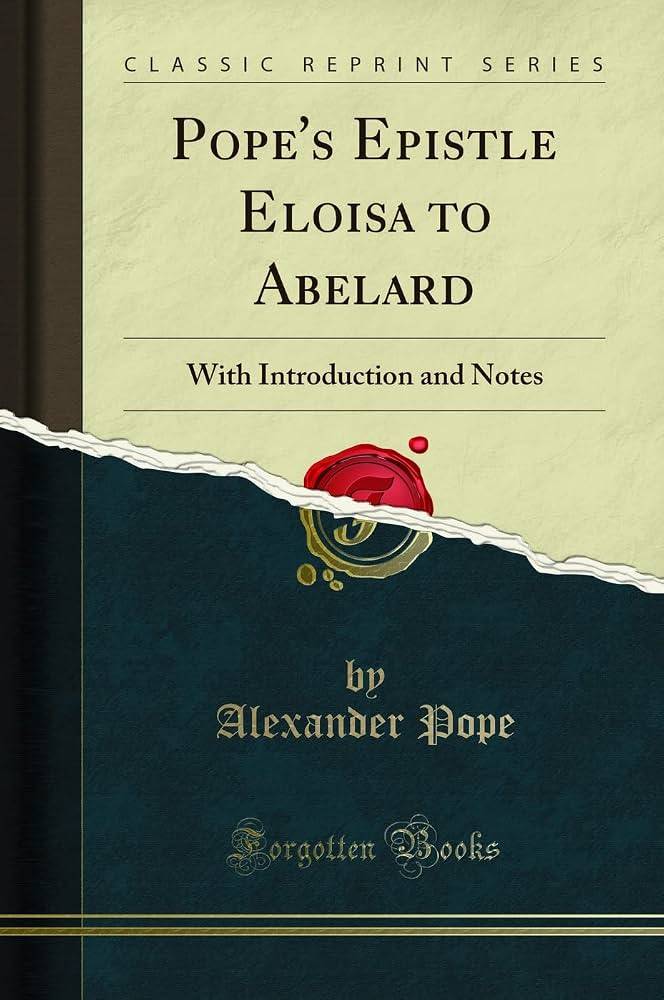
Eloisa to Abelard
Inspired by the historical relationship between Héloïse and Peter Abelard, this poem presents Eloisa’s inner conflict between passionate love, religious devotion, memory, and renunciation.
How happy is the blameless vestal's lot!

Literary Criticism
1735
An Epistle to Dr. Arbuthnot
Addressed to his friend John Arbuthnot, the poem defends Pope’s literary reputation and attacks the critics, rivals, and public figures he believed had treated him unfairly. It combines personal reflection with sharp satire.
Damn with faint praise, assent with civil leer,
Sanctuary of Aphorisms